Design a solution for the hearing impaired so they can easily have access to guidance, information and receive adequate treatment.
This was a master thesis project carried out at Aalborg University Copenhagen. We suggested a rethinking of the role of the hearing-impaired individuals within the healthcare of hearing treatment in Denmark.
The outcome is an online platform where users can access a central repository for key information with social features. The role of the platform is to facilitate and empower hearing-impaired to actively participate in the community and contribute with their expertise.
-
Location - Copenhagen, Denmark
Project team - 3 members
Timeframe - 5 months
Stakeholders - Hearing impaired, audiology specialists, Høreforeningen, GN
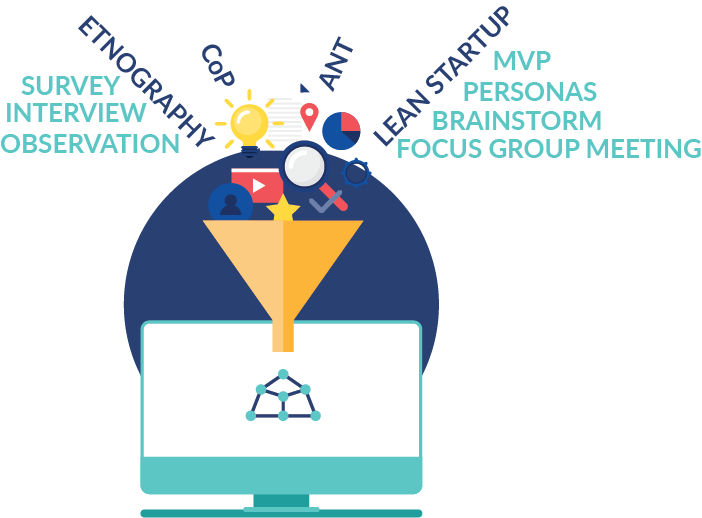
Methods - Desk research, interviews, survey, observation of online communities, focus group meetings, platforms audit, prototyping, personas, testing with the end-users
Theories - Communities Of Practice, Actor Network Theory
-
• Researched and analysed hearing treatment system
• Observed Facebook online communities with the focus on knowledge sharing between the users and their relationship with the technology
• Conducted survey and interviews with hearing-impaired and industry professionals
• Defined design requirements based on reaserch findings
• Developed a prototype solution
Disability does not arise within the individuals and their impairment but rather from a system that fails to take into account their needs and capabilities. If people can be excluded by the design, then they can also be enabled and included by user-centred design.
With this project, we are going away from the idea of the hearing impaired as a distinct group outside of mainstream society. We recognise that hearing loss is something that we all might experience during our lifetime and therefore is a part of a normal life course.
We wish that this population actively participates in the society and design, that design itself becomes rather inclusive than exclusive. The goal is to provide suitable, usable tools and encourage different levels of participation for this community to become self-supportive.
“In Denmark, every 6th person above the age of 18 is considered to have a hearing impermeability. This is approximately 800.00 people living with some kind of hearing impairment.”
Societal problem
Untreated hearing loss poses substantial costs to individuals, their families, education, the health care system and the economy. Furthermore, it is predicted that the number of citizens with a hearing impairment is going to rise.
-
Risk of depression & anxiety disorders
Felling of loneliness, isolation, frustration
Tendency to withdraw from larger gatherings
Likely to have lower-status positions and lower-paid professions
Retiring at an earlier point
Higher unemployment ratio

Going online
The project took place during the “first Covid19 lockdown”. We had to adapt and restructure our R&D plan, moving away from physical to virtual space.
The methods applied for acquiring data were primarily a combination of virtual ethnography, survey questionnaires, interviews through email correspondences, video and phone calls.
The choice of this approach has been seen as the most appropriate while it has not been an option to set up physical meetings, workshops or other kinds of data generation that require in-person interaction.
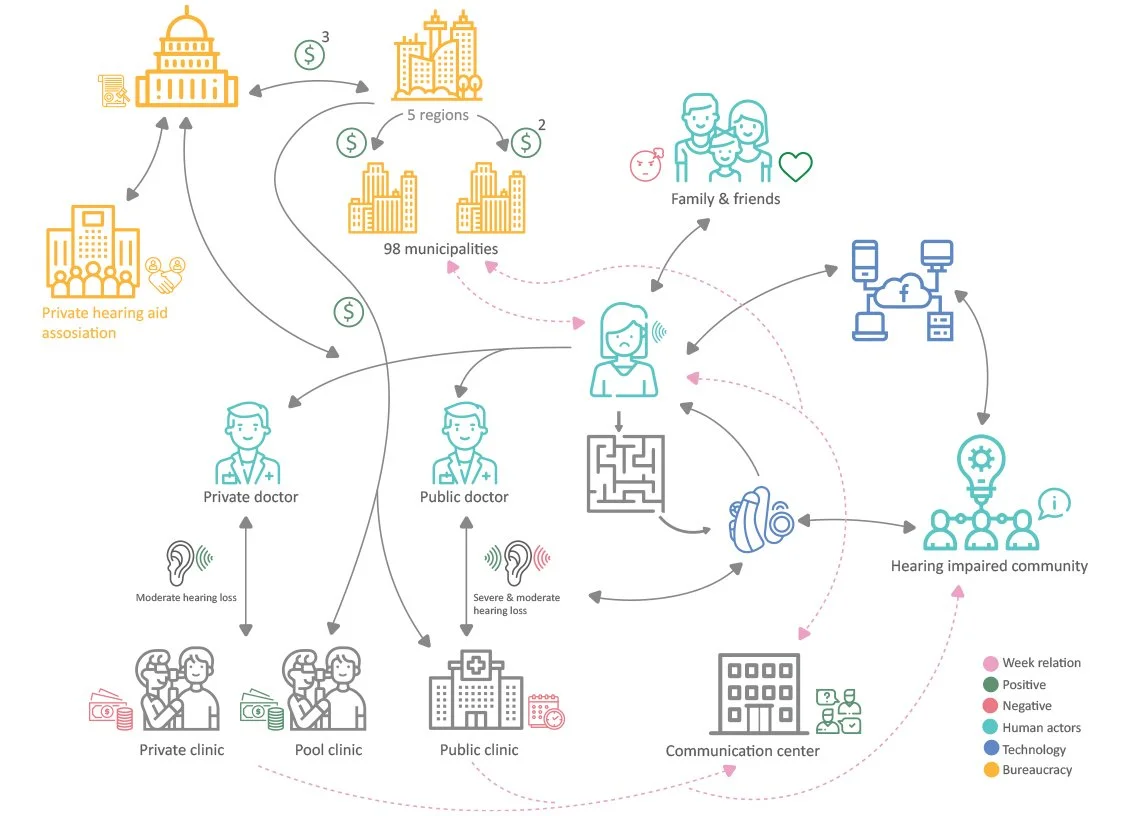
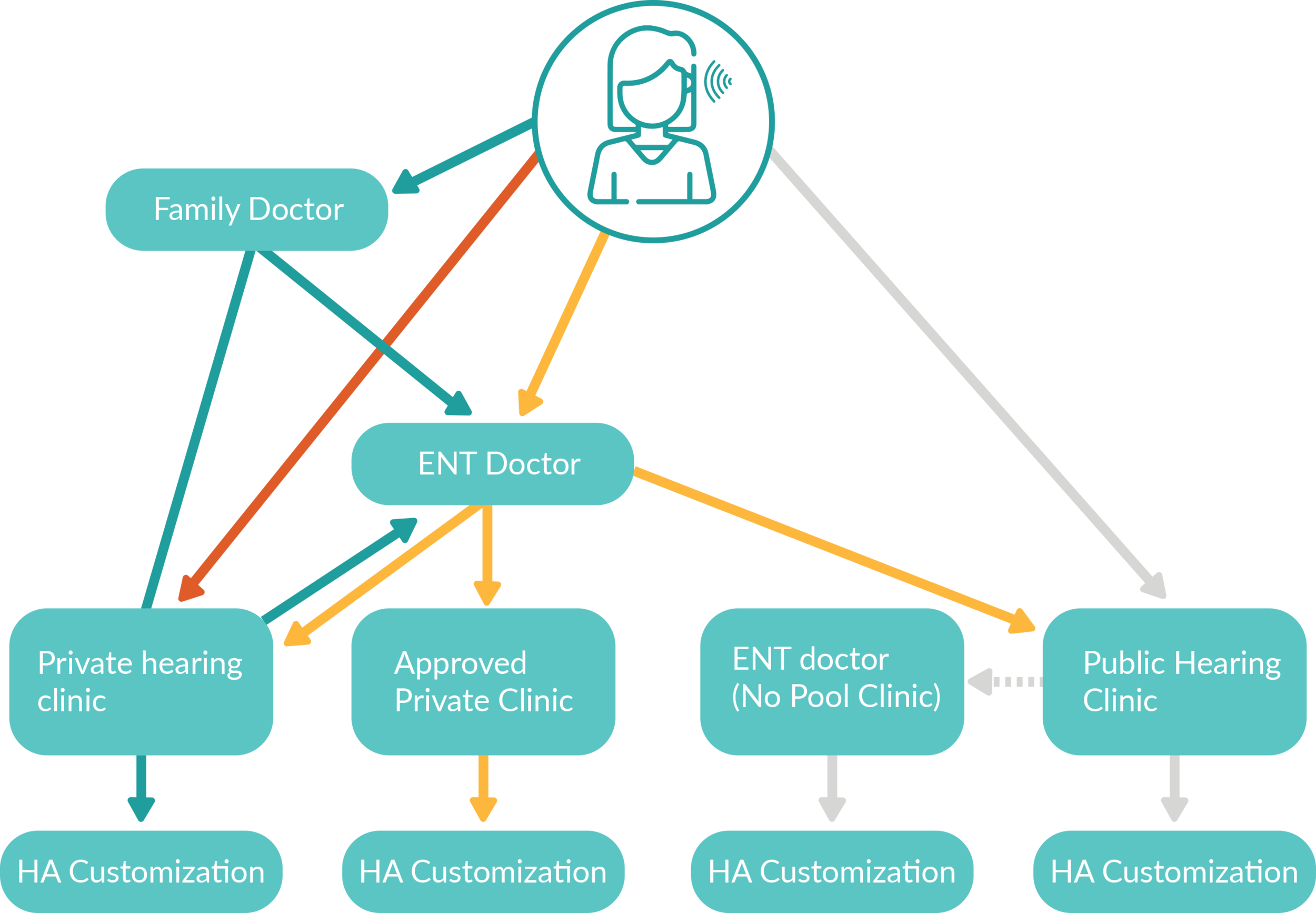
Mapping the system and relations
One of our primary goals was to gain a micro and micro perspective on the system. With this, we aimed to acquire a systematic perspective while at the same time, being able to understand the individual.
Through mapping, we were able to visualize where relations between stakeholders could be modified and better aligned in a near future.
Interviews
Semi-structured interviews consisted of questions and themes based on initial desk – and literature research. Besides hearing impaired, industry professionals have also been interviewed, to get their perspective and what problems they see as prevalent. An audiologist, pedagogue, ENT doctor, and former audiologist within the private sector has been involved in this process.
-
Lack of clear information on the patient’s possibilities
Gaps in the law result in some doctors having a conflict of interest when it comes to recommending HAs
The fragmented system is affecting the patients in a negative way
The fragmented system is partly responsible for the long waiting times
Poor collaboration between regions in regard to hearing treatment
A large number of people returns their devices
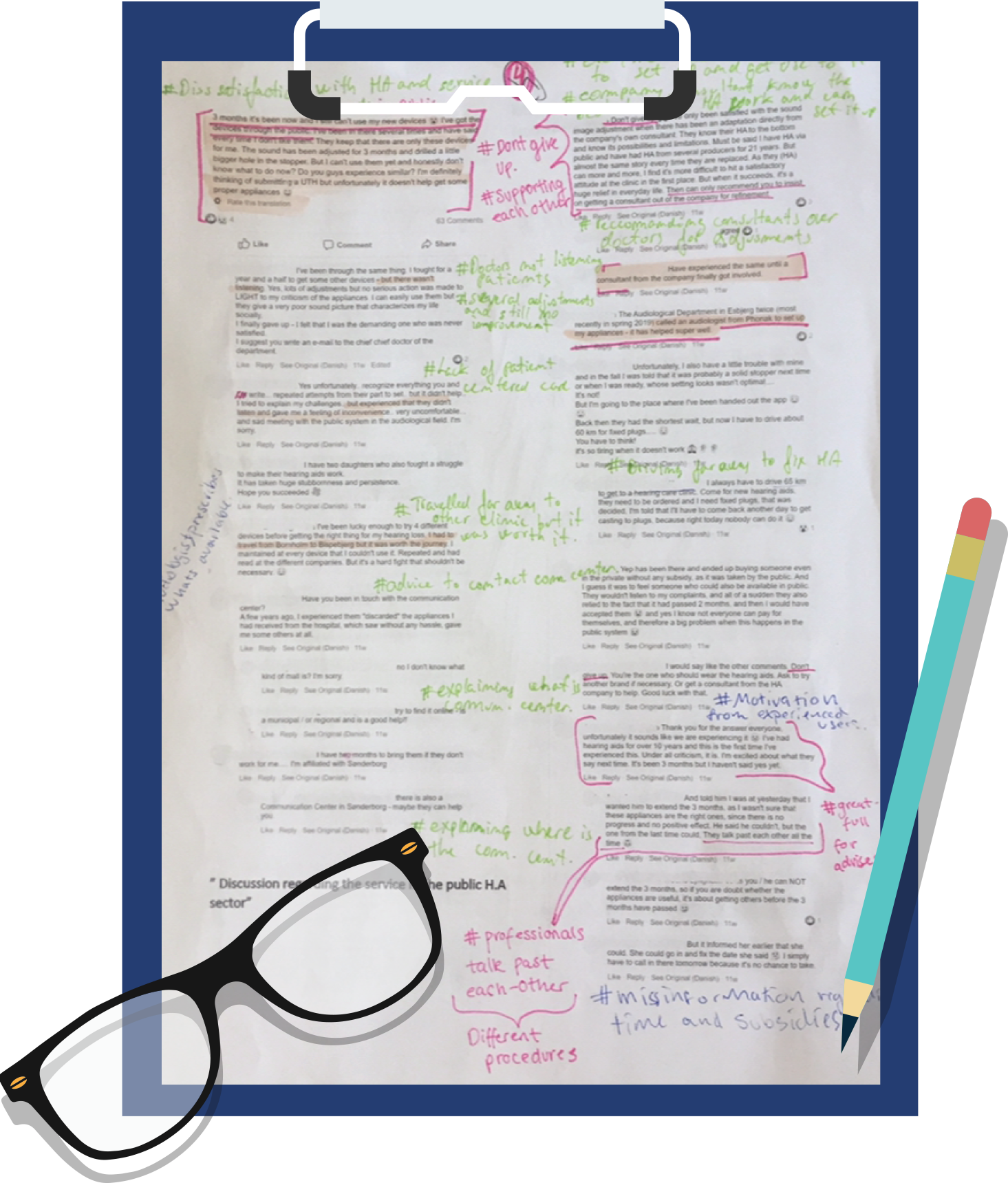
Observing Facebook online support communities
When institutions don’t provide a certain kind of support, individuals turn to each other through online support communities. These have been proven most beneficial during the time when most of the institutions were closed.
We saw the opportunity to get closer to the hearing impaired and gain an understanding of their problems, their relationship with the technology and knowledge sharing between community members.
-
Through the observation, we found out that members tend to help each other whenever possible but the way the platform is preconceived influences how the users add and consume the content. We are questioning whether it is the most optimal solution for this community.
The content is being “moved down” when new content is being added. For this reason, we have identified a knowledge drain occurring because individuals cannot easily find needed information by e.g. using a search option
Because of the above-mentioned issue, questions and discussions are being repeated
The individuals who are not using Facebook are excluded
Occurrence of false and incomplete information
The presence of the private company representatives seeking market opportunities (going against the rules of the community)

Surveys
The survey was designed to cover stages from the early period of a hearing loss, the process of seeking help, and lastly the period of using HA devices. It enabled us to collect both qualitative and quantitative data.
-
Hearing loss is creating different obstacles in numerous social circumstances
The stigma regarding wearing HAs is still present
There is a lack of collaboration between the private and public sectors
Lack of technical guidance received from doctors/ audiologists
Patients are not aware of their rights and opportunities
Lack of holistic approach to treatment
HAs holds a great value to the hearing impaired
Key insights

-
It can take up to 115 weeks to get aid. In some cases, because of long waiting lists, individuals choose to seek help through the private sector.
The way the policies are constructed today, there is nothing to prevent ENT doctors or private audiology clinics to have economic interests when treating individuals and assigning them with HAs

-
Particularly difficult and confusing for people with a newer hearing loss. Patients were not well informed regarding their rights and opportunities for treatment while many were not aware that they had the possibility of treatment outside of their region. In some cases, this can ease and speed up the process. Additionally, some were not aware that they could get grants for HAs at the approved private clinics.

-
The process was described as “assembly line-like”. Overall, certain patients felt that a holistic approach within treatment is lacking. They wished that doctors showed more interest in what patients have to say and how they experience their condition. Some explained that they have encountered different audiologists during the process, and with each one, they would “start from scratch”.

-
The most common problem when having received the new device. Participants explained that it was not satisfactory and that they had to ask others for help or seek solutions on the internet. The time they spent on consultations was not enough to learn how to use the device.
Solution development
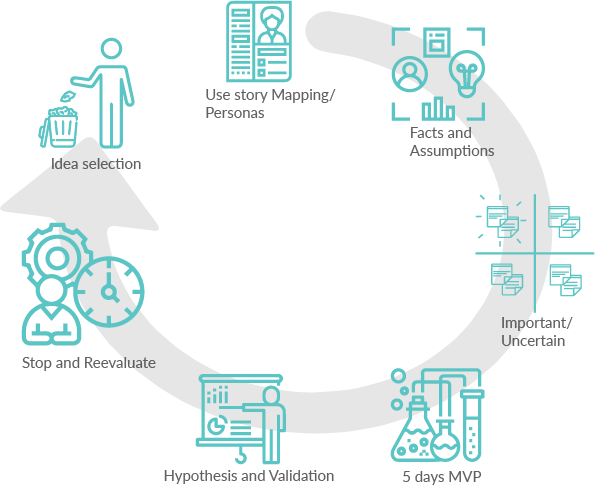
Procedure:
• Create a user experience vision (a brief description of the concept)
• Examine the concept and identify critical assumptions
• Build an early version of the concept to validate assumptions (Smoke Screen MVP)
• Release and Measure
• Pivot or Persevere
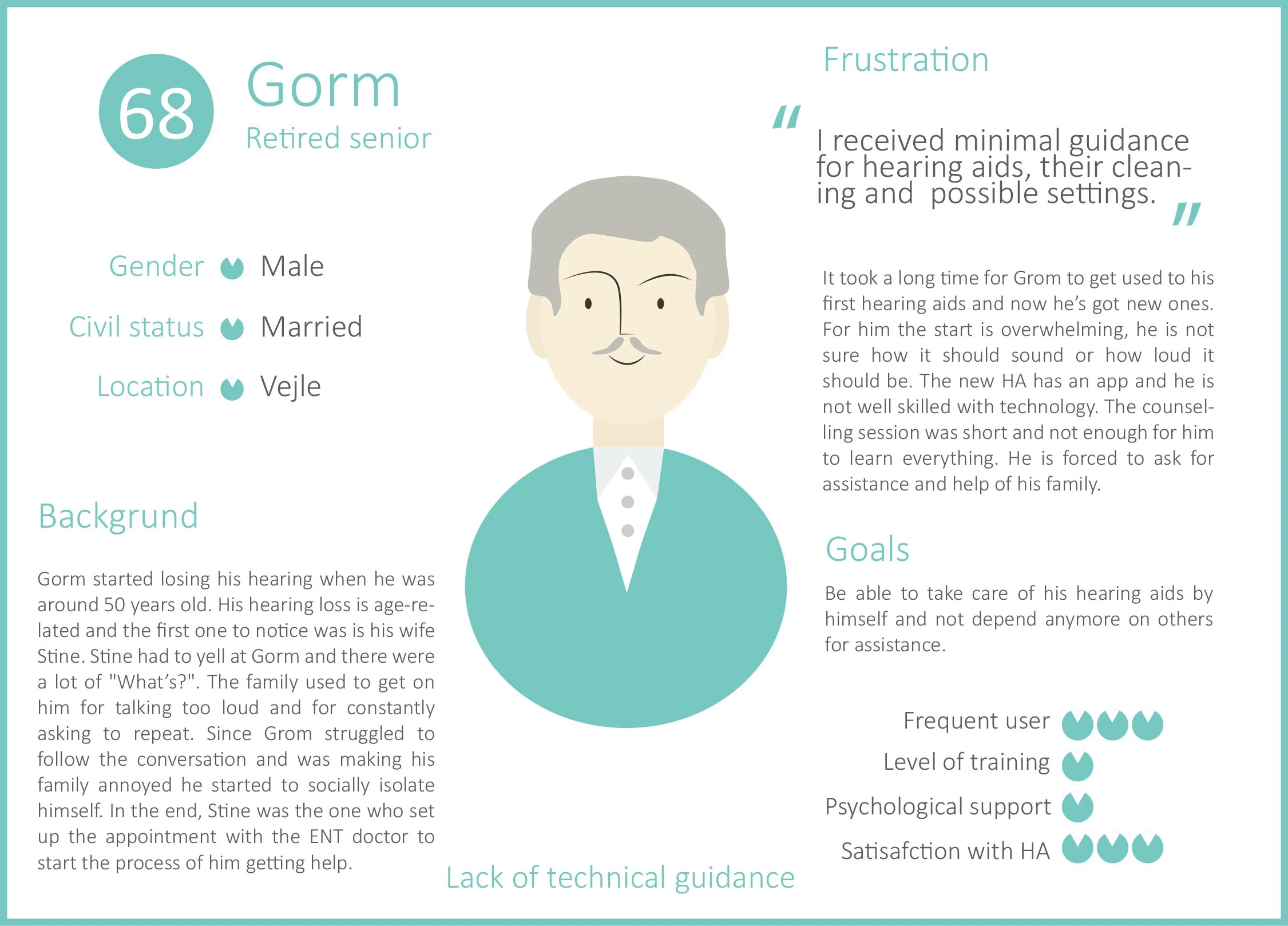
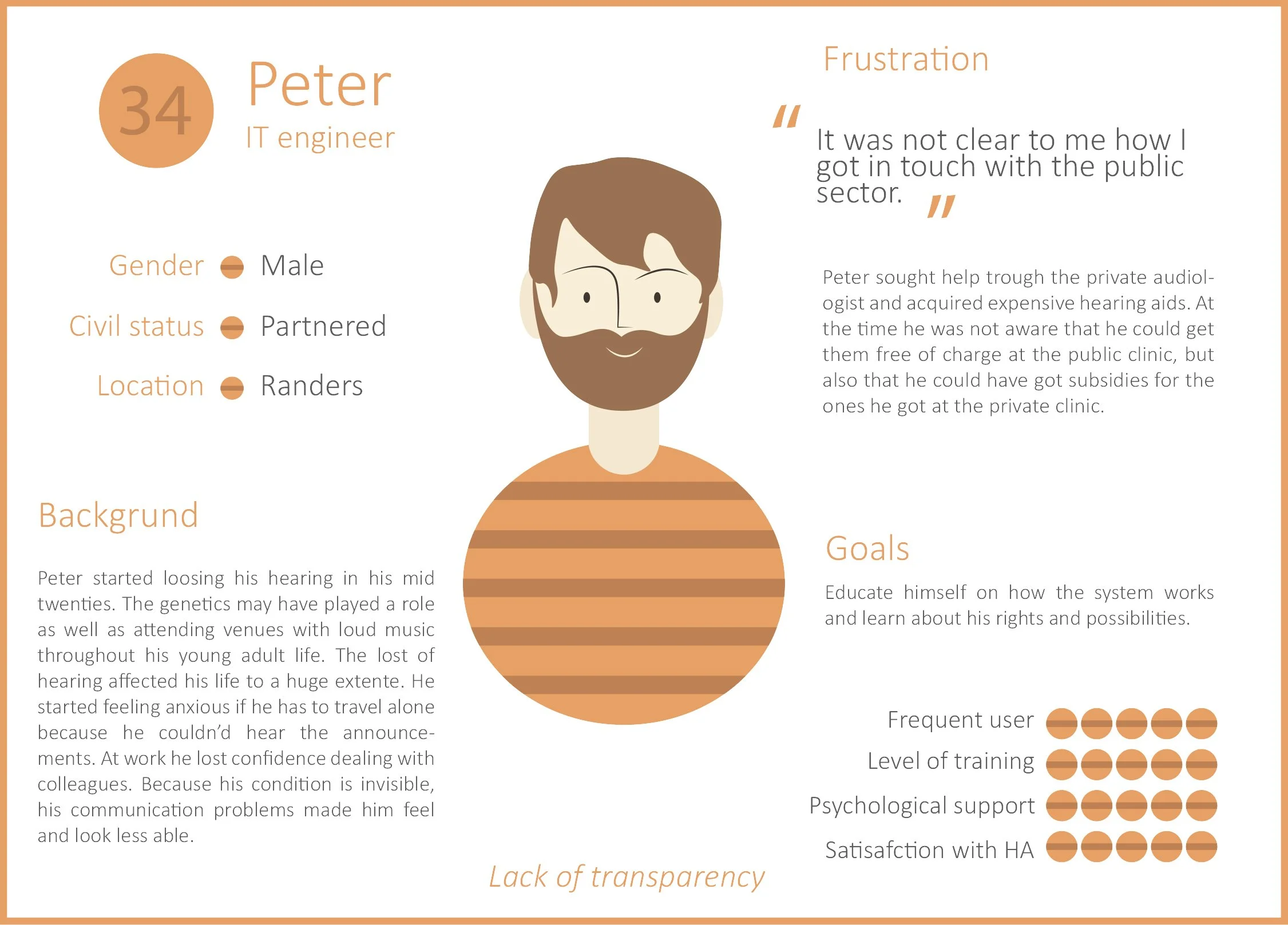
Personas
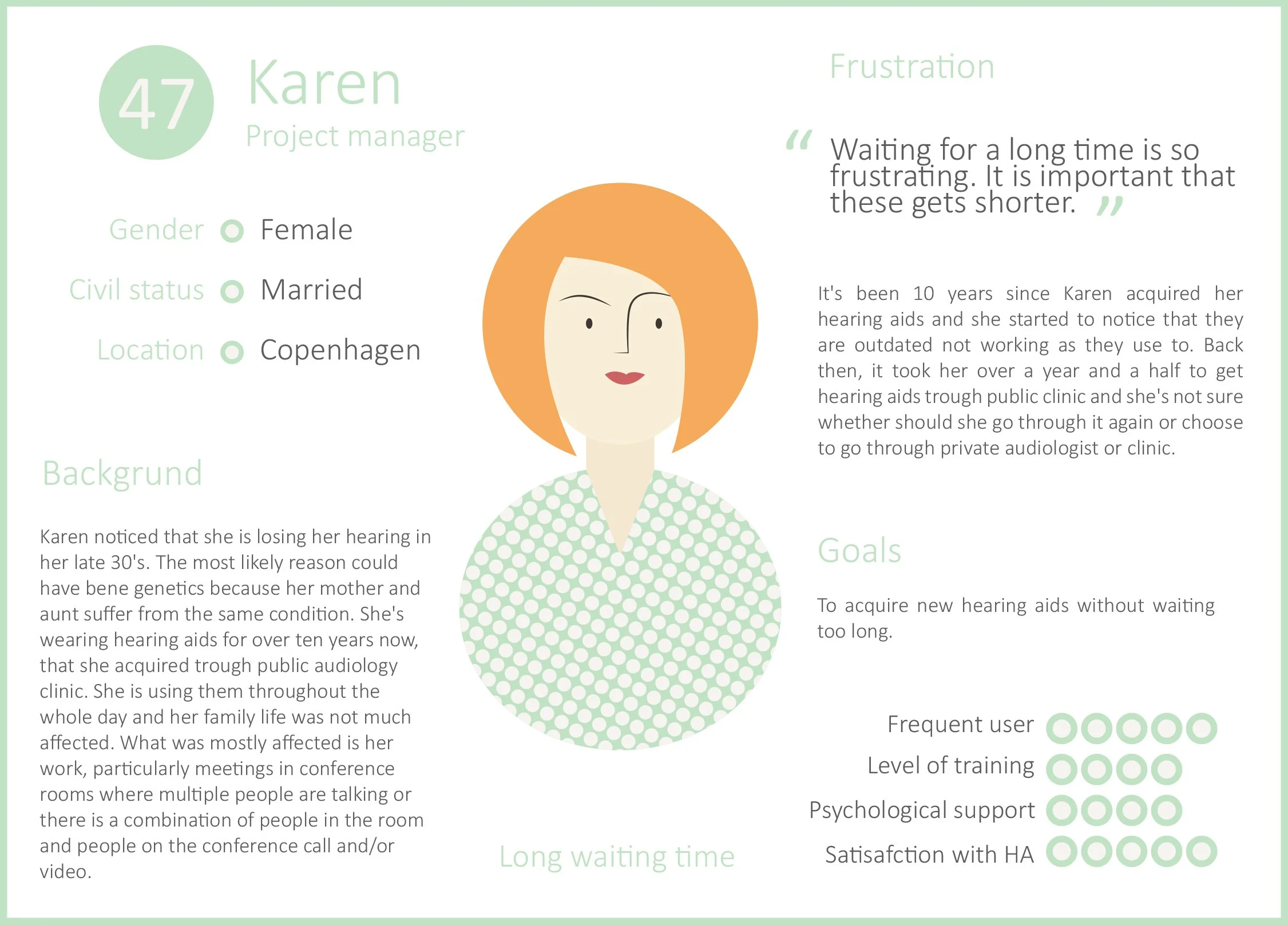
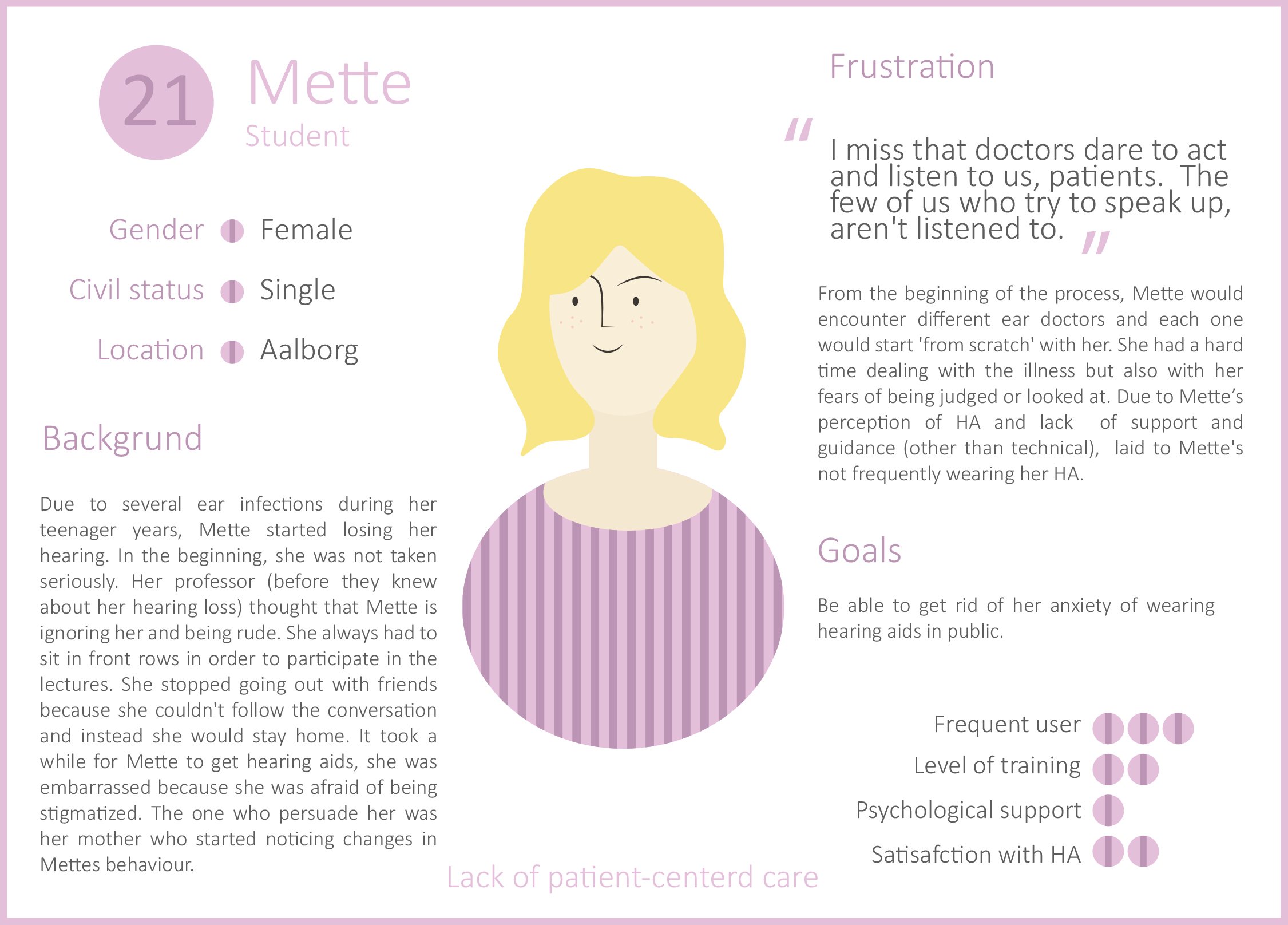
Four personas were created, based on the analysis of the conducted surveys, interviews and observations. The segmentation is based on four identified problem areas.
They were kept in mind throughout the design process and referred to when making important decisions related to the design, functionality, and features that should be added to the solution.
Ideation
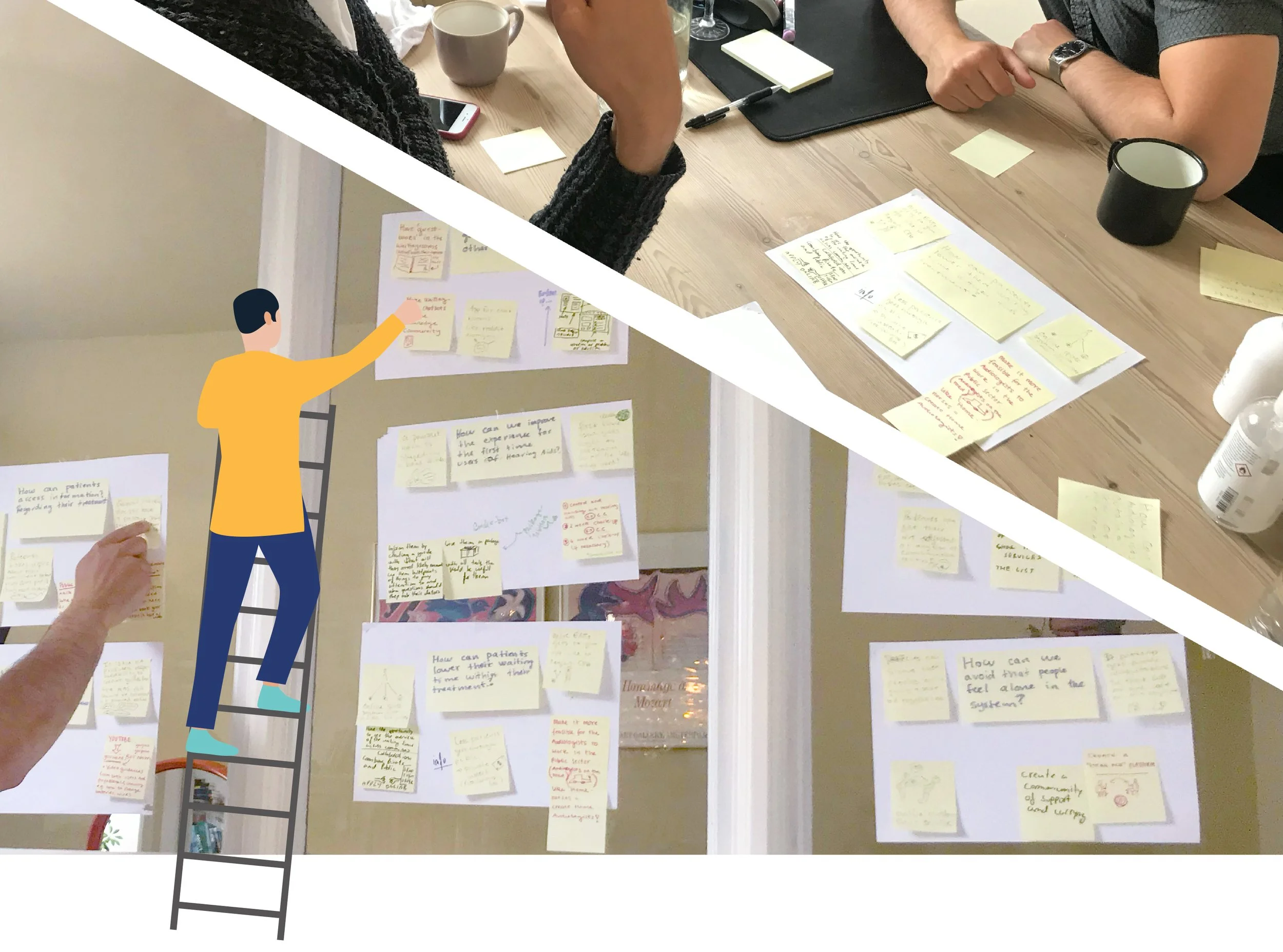
After constructing the four personas, we could start defining design requirements based on their problematics and needs. The requirements list is built on the basis that each problem statement must be answered with a concept requirement. This was done through the use of the affinity diagram. Having conducted the brainstorming, the concept ideas were further rated with their feasibility in mind. Each participant got two votes and the opportunity to explain their choice.
By putting up the highest-rated ideas, it was decided that the solution is based on an online platform and that several brainstorm ideas will be linked together. We initiated another concept iteration by creating a list of requirements and functionalities that the platform should contain.
Initial concept prototype
Hør Her (Listen up), is a platform whose mission is to act as a central online space where users can access important information, interact with other individuals suffering from hearing loss and experts from the field of audiology. We see hearing-impaired as the experts where the role of the platform is to facilitate and empower this group to actively participate in the community.
The platform includes:
Discussion forums where people can share their experiences and help others
An overview of the opportunities for treatment in Denmark
Technical guidance to hearing aids and maintenance
Database for researchers and policymakers
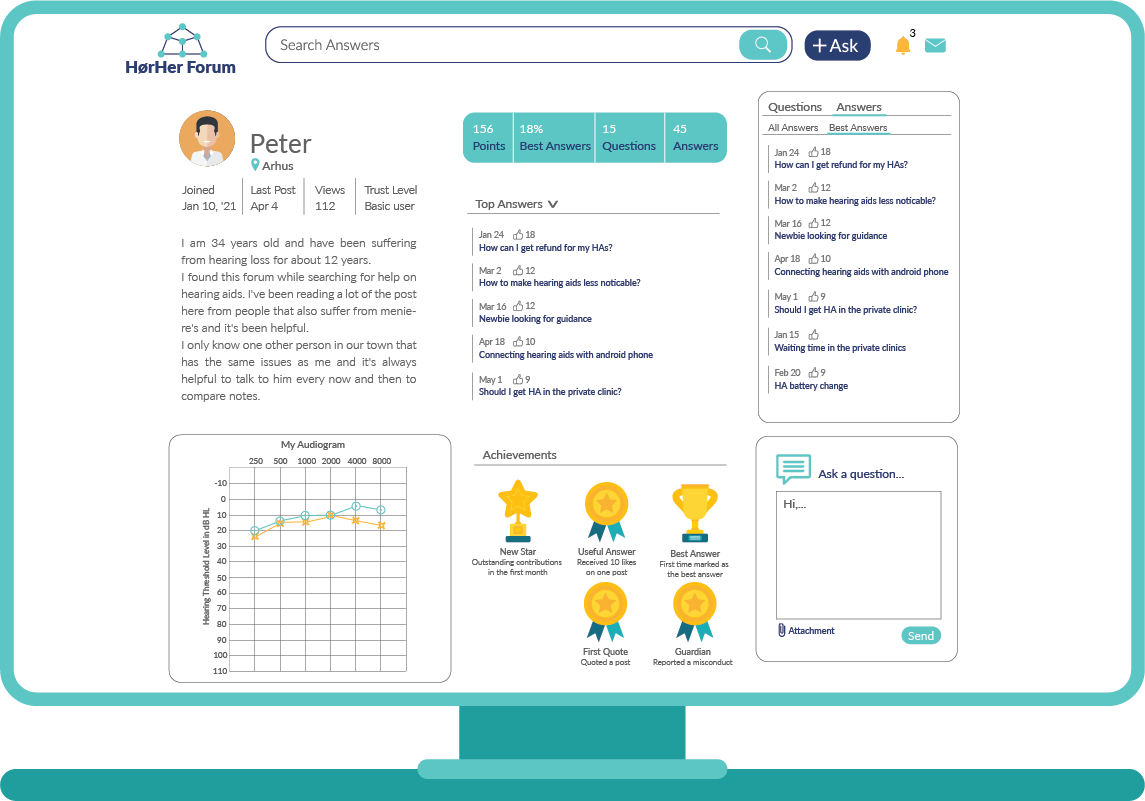
User as a central figure
To be a part of the support community, it will be required to go through the signing-up protocol. Besides the hearing impaired, professionals like audiologists, ENT doctors, communication centres employees are also present. They will be differentiated with colour that symbolizes their role (e.g. doctors marked as blue).
Users will customize their profile decide and how much information he wants to disclose about themselves. The profile can include bio, audiogram, activities like imposed questions and answers but also contributions shown in the form of rewards.
Debate forum
The platforms’ knowledge base will grow through the debate forums. Users are encouraged to share their experiences and choices to have as many diverse perspectives on the topic.
The forum is conceived so it categorizes the data in an intuitive way so users can easily access necessary information. Posts are going to have tags and be assigned to a certain topic or a sub-topic (for eg. Hearing Conditions being a group and Tinnitus being a subgroup).
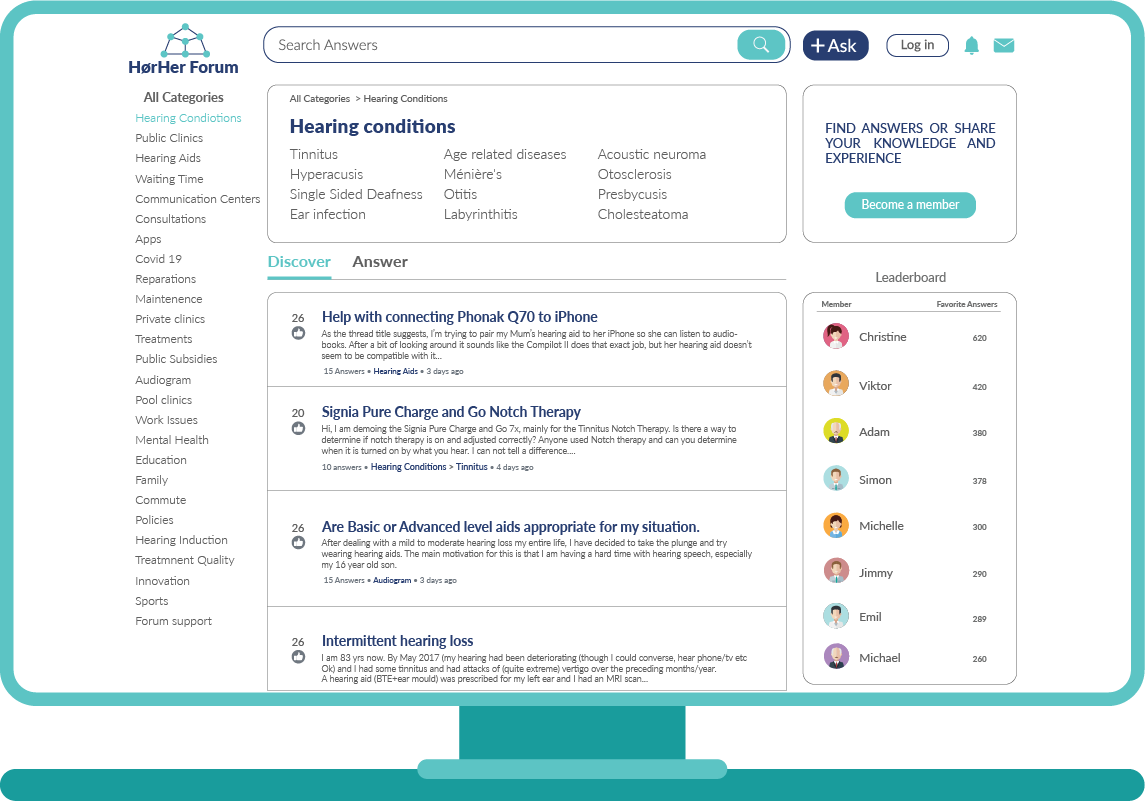

Users moderators
Users will be able to reply with their answers but also rate the answers so that the best ones will always show up at the top. In that way, users will be moderating each other and it will be easy to see the most useful answer according to other community members. Ratings are not to create competition but to increase engagement and as proof of information's quality.
Value proposition
For the concept to be implemented and for the key stakeholders to be enrolled, it was important to be clear what are their interests, what are they getting out of the platform and their roles.

-
Opportunity to facilitate self-sustaining community
Efficient database
Reinforce their role in the hearing treatment system
Stronger influence in the creation of new policies

-
Gain firsthand knowledge about their patients
Save time and resources by communicating through the platform
Contribute with their expertise
Get in contact with other experts in the field

-
Gain a system overview and quality assurance
Achieve the goal of being the first in the hearing treatment
Have healthy and happy citizens
Reduce the costs regarding the labour market related and early retirement
-
Won’t feel alone in the system, be part of the supportive community
Easily access needed information
A clearer understanding of the hearing treatment
Empowered to contribute to society with their tacit knowledge
Testing and evaluation
To validate our concept, we decided to conduct an experiment with the targeted group by creating a “smokescreen” MVP in the format of a video. The idea was to find out as quickly as possible if the design is solving users’ problems and if they will be willing to use it. The video describes the purpose and key functionalities of the platform.
The MVP was shared through:
• Emails to previous interviewees (Hearing impaired, Audiologists and ENT doctor)
• Facebook groups which we used for our survey and observations
• Focus group meeting with experts from Force Technology and Høreforeningen
Pivoting & Preserving
The visual representation of the platform worked well in conveying the ideas about the concept. Based on the feedback from the hearing impaired and from the meeting with the audiologists and the healthcare professionals we decided that our concept should pivot into a merged collaboration with Høreforeningen.
The initial plan of HørHer being an autonomous platform transitioned into being an addition to an already existing hearing association platform. The visitors of the association website would encounter two novelties on the main page. They will have an option to create a user account and access the HørHer forum.
Enrolling the users
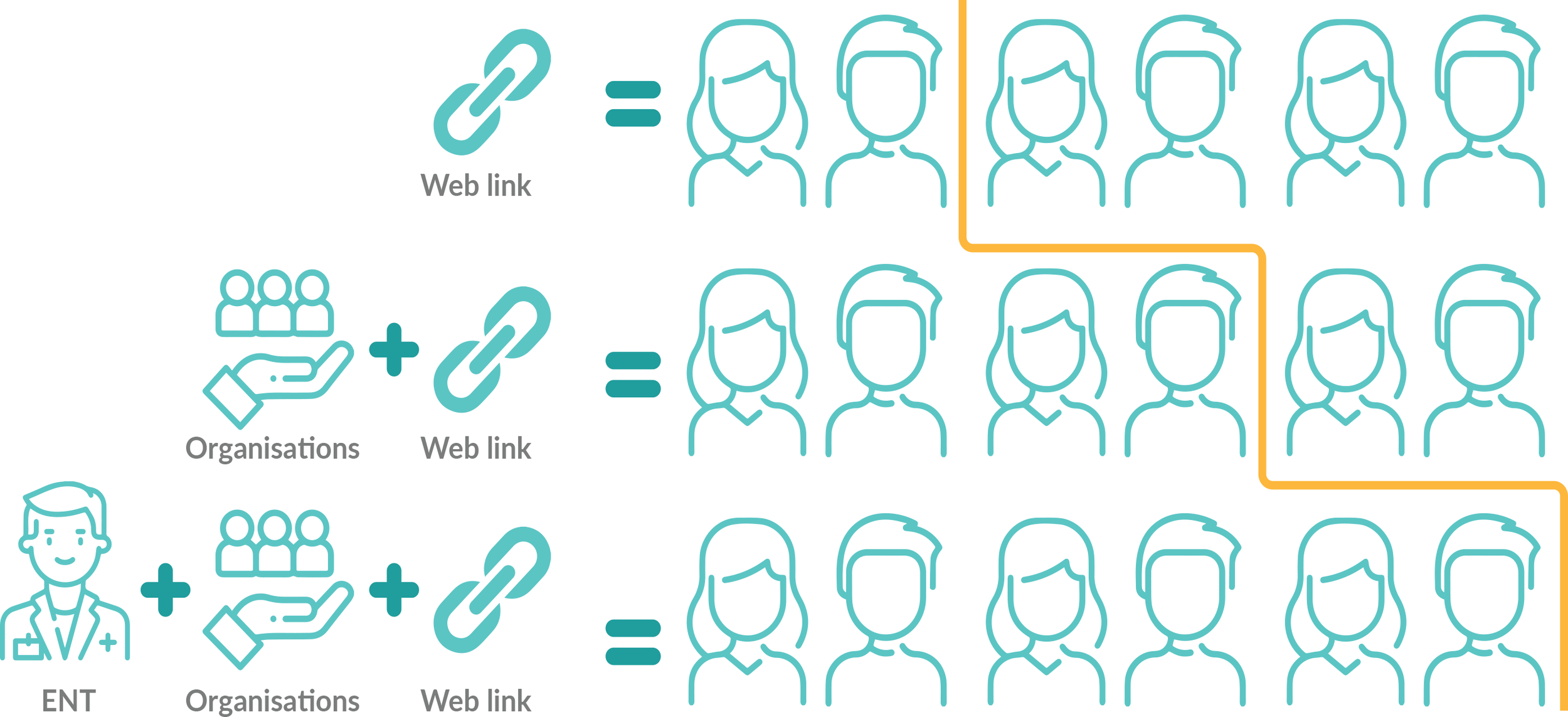
Relaying on organisations such as Høreforeningen could help with the initial enrolment as they have a direct link to many users through their many years of existence. Having the ENT doctors or private clinics onboard will create an unavoidable enrolment for the hearing impaired during the appointments with their patients.
Roadmap
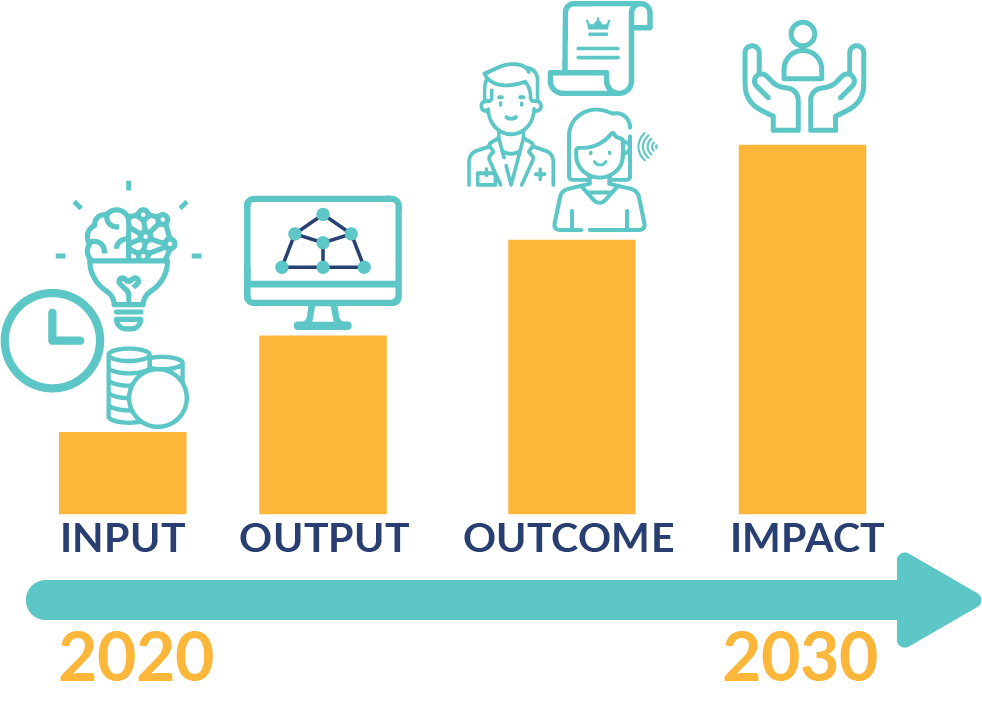
Input: presents all the means and resources like time, money, knowledge, ideas but also the alignment of different actors in the conducted activities.
Output: presents the result of these activities which is HørHer knowledge-sharing platform.
Outcome: presents the short term effects that are achieved for the targeted group from implementing the concept. We see some of those effects as in empowering the hearing impaired to play a more active role in the system and taking the responsibility for themselves and their community. Hearing experts, improving their knowledge, skills and approach. Hearing association, strengthening their role as an institution that represents this group in policy-shaping.
Impact: presents the achieved effects for the society in a long run. We see the system is reorganized, where the policies are put into place so they serve this marginalized group. We see Denmark being #1 an example for others to follow when it comes to hearing treatment and in the wellbeing of their citizens.